
As kindergarten teachers, we can get into a cycle of repeating ourselves in order to get students to listen. Wouldn’t it be nice if we could give a direction once and then have students follow those instructions without reminders? This doesn’t have to be just a dream! In this post, I’m going to share some tips to help you get students to follow directions the first time.

Do You Feel Like a Broken Record?
It’s common for kindergarten teachers to feel like they have spent the day repeating themselves over and over like a broken record. After all, young kindergarten students are still learning how to navigate the expectations of being a student in a classroom full of distractions. There are going to be moments when students just aren’t listening to directions! However, this doesn’t mean you have to accept a fate of repeating directions all day long.
How to Get Students to Follow Directions the First Time
There are several strategies that you can use to get kindergarten students to follow directions the first time:
1. Keep Them Short
The first and most important part of giving directions in kindergarten is to keep them short. Young five- and six-year-olds have short attention spans and their brains are still learning how to follow multi-step directions. The longer and more complicated your instructions, the less likely your students will be to follow them the first time.
You might need to break up larger tasks into smaller, more manageable chunks so you don’t have to give your students so many instructions at once. You can also create natural checkpoints in your classroom tasks when you can give the next set of short, manageable instructions.
2. Limit Verbal Instructions
In addition to limiting the number of steps in your directions, you should also cut down on how much you use your voice to give them. There is a limit to how much auditory information your students can process and retain before they will need it to be repeated. You don’t need to front-load a task with long, verbal instructions because students simply won’t remember them.
The other issue with verbal instructions is that they disappear the moment you stop talking. Students don’t have anything to reference as they try to follow the directions independently. This results in students getting out of their seats to ask you what they should do next, causing you to repeat directions multiple times for individual students. This just adds to the classroom distractions and interruptions!
3. Incorporate Visual Supports
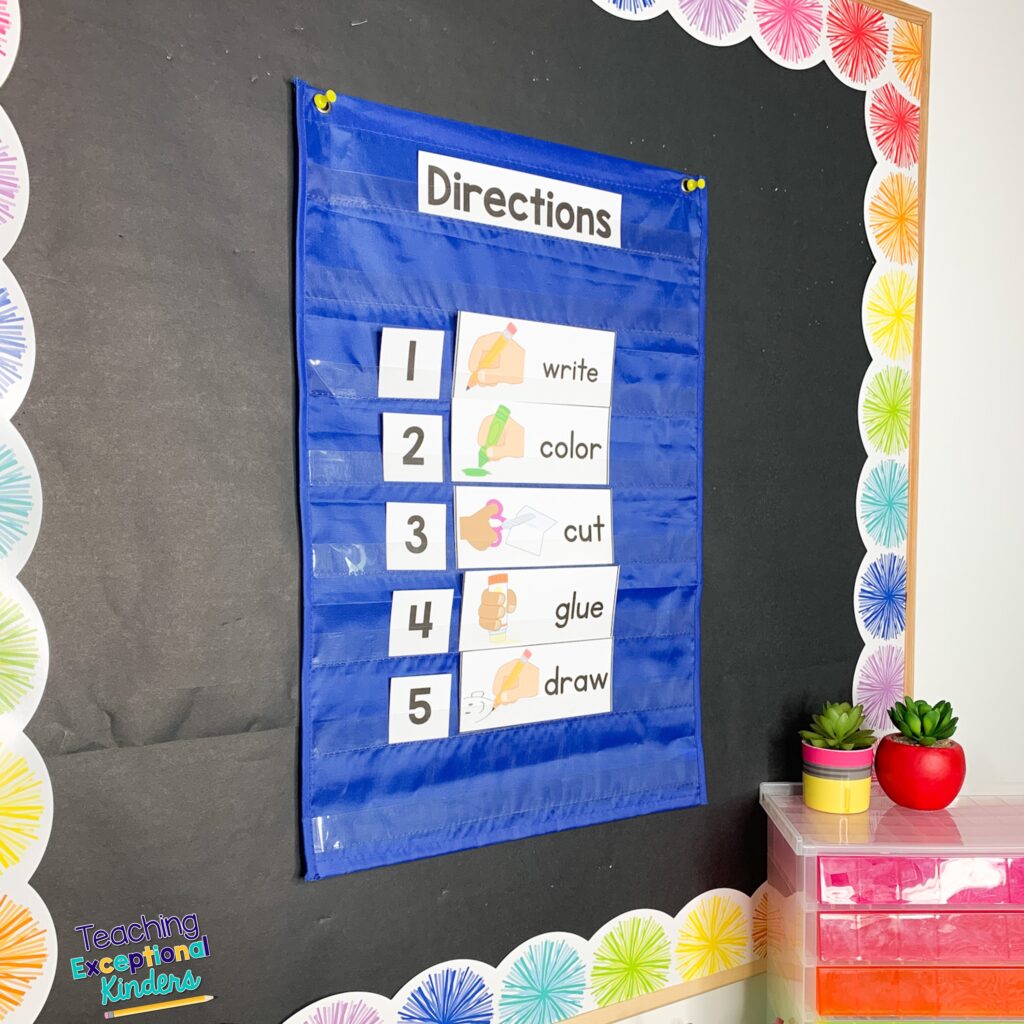
One way that you can cut back on verbal directions in your classroom is to incorporate visual supports throughout your daily routine. Visual supports give your students something to reference after your verbal directions have been given. Students can easily check to see that they’ve followed each step by looking at the visual you’ve provided.
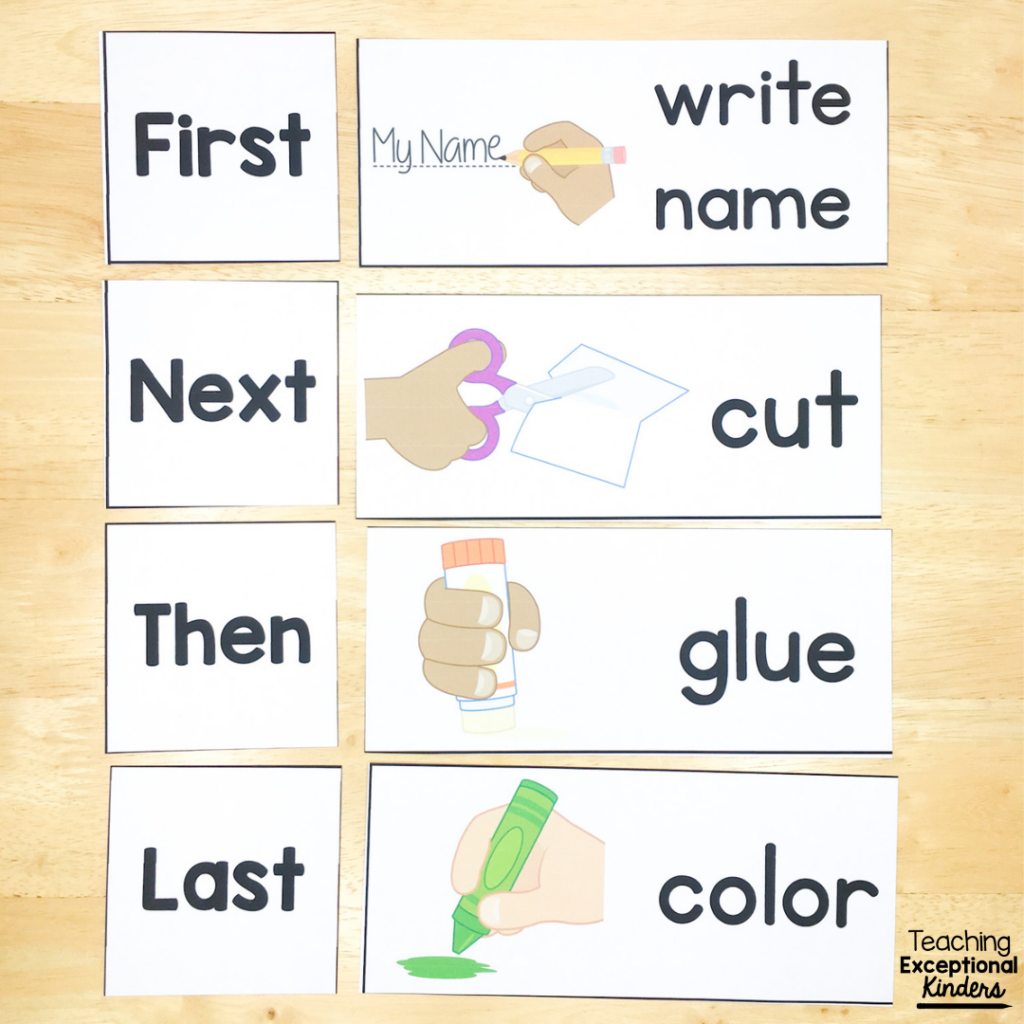
Getting started with visual supports doesn’t have to be complicated! You can use simple icons that have been printed onto cards or you can even draw icons on the whiteboard as you give verbal instructions. You could also use photos of your classroom materials or printed graphics of common classroom tasks. The key is to display them on a magnetic whiteboard or in a pocket chart so students can easily reference them as they work.
Another hurdle in getting started with visuals is knowing when to use visuals and how many to use. You want to use enough to get the message across but you don’t want to use so many that it becomes visually cluttered for students. One of the best ways to decide if you use enough visuals in your classroom is to ask yourself this question: “If I stopped talking right now, would students still know what to do?” If the answer is no, you should add a visual.
4. Use Consistent Routines
While limiting your verbal instructions and using more visual supports can go a long way in getting students to follow directions the first time, there is one more thing that you can do: Use consistent routines. When your day has a predictable structure and flow, your students will start to follow directions automatically.

From your arrival routine, to centers, to lining up for recess, there are many times during the day that you need to give verbal instructions to your students. Many of these are routines that can become automatic for students with consistency and structure. You will quickly find that students are able to easily follow directions for these structured routines.
Young kindergarten students thrive on routine, so the more tasks that can become consistent and automatic, the better. When classroom expectations feel like a moving target, students are much less confident in following directions. They will be more likely to wait until you have repeated the instructions before they will feel ready to follow them.
Printable Visuals for Kindergarten
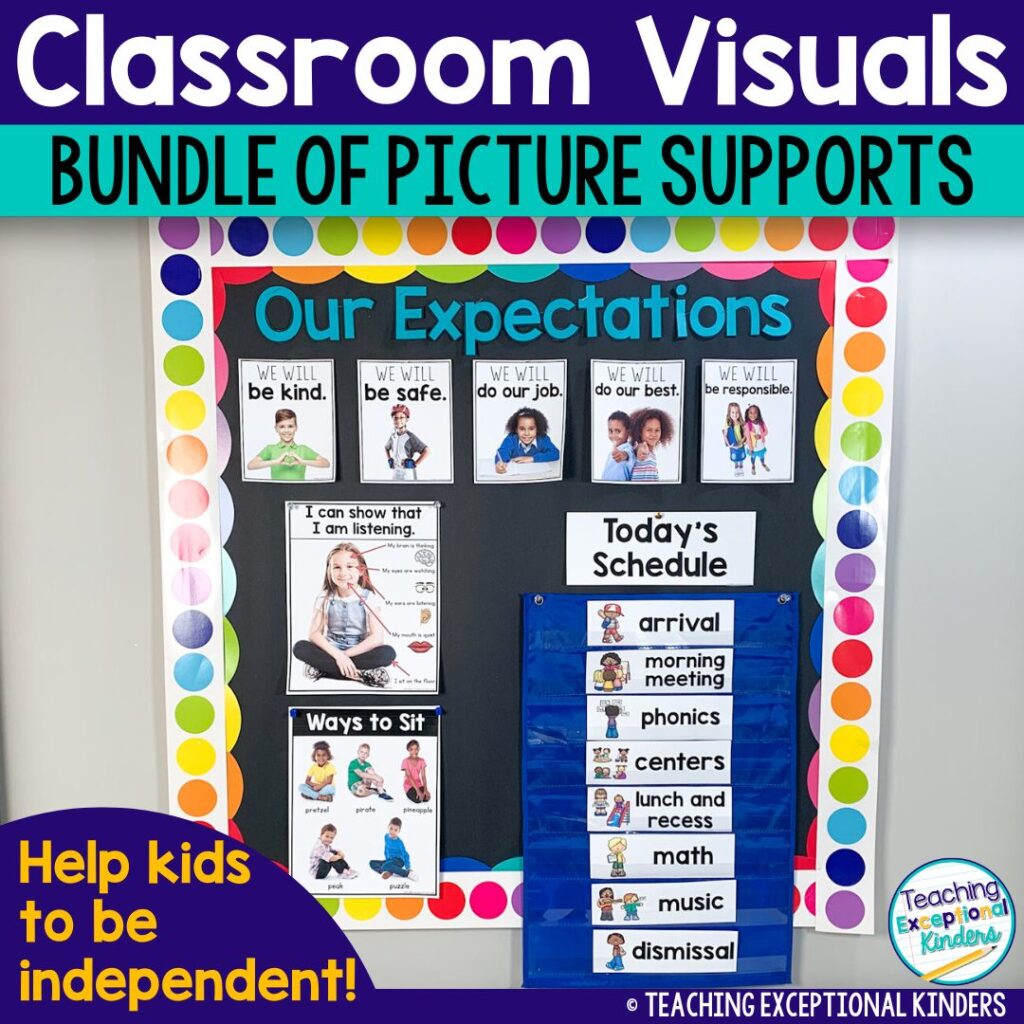
If you would like to cut back on verbal instructions and use more visuals in your classroom, I can save you some prep time! I have put together a bundle of visuals that you can use to get students to follow directions the first time. In addition to picture direction cards, you’ll also find visuals for classroom expectations and the daily schedule, so you can limit the number of verbal reminders you need to give throughout the day. These visual supports can be a complete game changer for teachers who feel like they’re repeating themselves all day!
You can find this resource in the Teaching Exceptional Kinders shop or in my TPT store if you’d like to take a closer look at everything that’s included in this bundle.
Save These Kindergarten Classroom Management Tips
Be sure to save this post if you’d like to come back to it later! Just add the pin below to your favorite kindergarten board on Pinterest. You’ll be able to quickly find these classroom management tips and resources when you’re looking for ways to get your students to follow directions the first time.
