

If you have a student who needs some additional support for their behavior, it’s important to track whether or not those supports are working. However, this data collection can be daunting for classroom teachers with so many other tasks to take care of during the school day! In this post, I’m going to share some tips to make behavior progress monitoring in the classroom a little bit easier.

The Importance of Progress Monitoring
Progress monitoring is an essential part of behavior management, particularly for students who demonstrate significantly challenging behavior in the classroom. There are several reasons why progress monitoring is so important in the classroom:
- Identify Incremental Improvement: It is rare for behavior to dramatically improve overnight! Progress monitoring allows staff and parents to see and celebrate the small improvements that are happening each day.
- Gather Documentation: Before a student can receive additional supports through other school programs, staff need to document student progress (or a lack of progress) with general education supports. Progress monitoring is a means of gathering that data.
- Identify Appropriate Supports: Every student is different, so what works for one student might not work for another. Progress monitoring allows you to identify the supports that work best for individual students.
5 Tips for Behavior Progress Monitoring
Even though we know that progress monitoring is important, it can feel like a daunting task to add data collection to your daily routine. Here are five tips to make it a little easier:
1. Start with a Specific Behavior, Intervention, and Baseline
The most important part of progress monitoring is to track a single, specific behavior. Even though there are likely multiple behaviors that need to be addressed, it’s best if you can be specific and focus on one behavior at a time. In addition, you will want to choose an intervention that you’ll be using to support the student and improve the behavior over time.
Once you’ve identified the behavior and how you’re trying to improve it, you’ll want to gather baseline data. How often is the student demonstrating the target behavior prior to the additional supports? The only way you can document progress is to know where the student is starting from.

2. Make Sure It’s Measureable
An important part of progress monitoring is to focus on a behavior that is easily measurable. If you have a student who frequently disrupts the class during instructional time, you might choose to measure how many times the student blurts out without raising their hand during whole group instruction.
3. Gather Consistent Data
Once you’ve selected the behavior and how you plan to measure it, it’s time to gather data consistently! This is probably one of the most challenging parts of behavior progress monitoring because, as a classroom teacher, you have so many things going on at once!
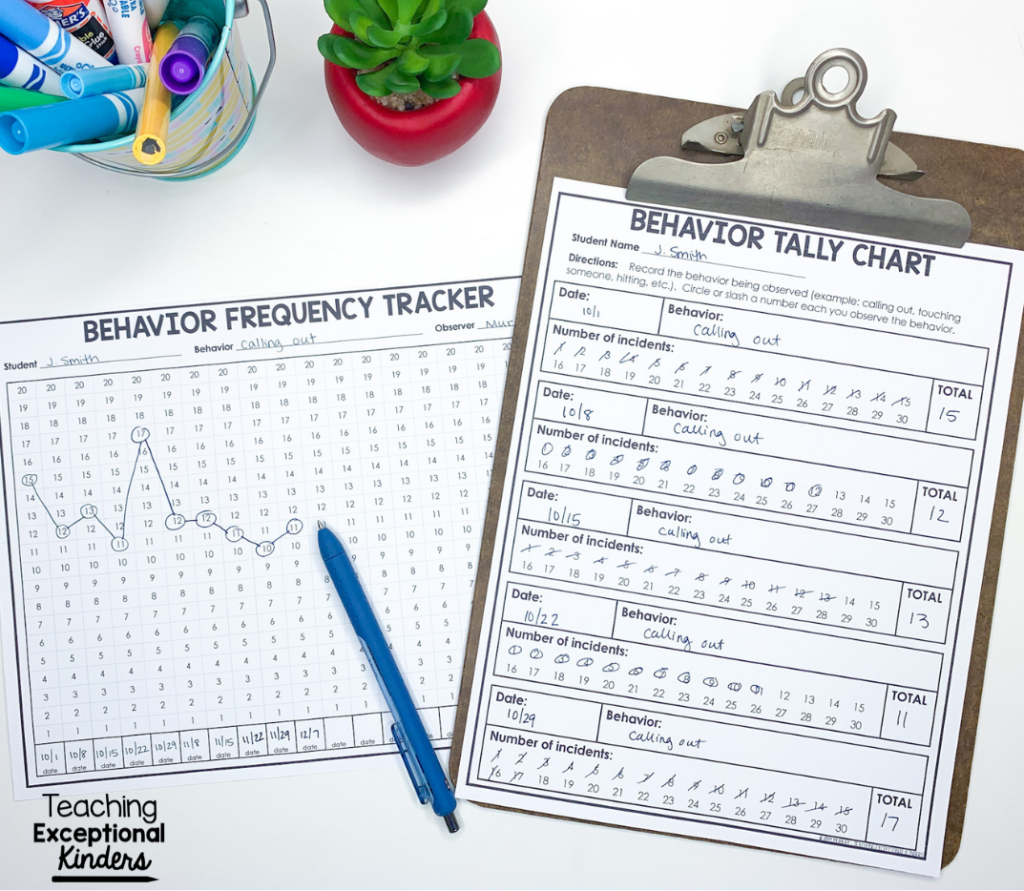
This is why it’s so important to choose one specific behavior and measure it with a tracker that simplifies data collection. For example, a frequency form makes it super easy to cross off a number each time the behavior happens. While tally marks on a sticky note can be simple, they can get messy and hard to keep track of!
You could also choose to monitor the behavior in specific chunks of the school day that are the most challenging. Not only can this make progress monitoring less overwhelming, but it can also help identify some patterns about the student’s behavior over the course of the day.
4. Share the Results
As you gather data about a student’s behavior, be sure to share the results with parents and the relevant school staff. It’s important that parents feel like they’re part of the team when it comes to supporting their child at school.
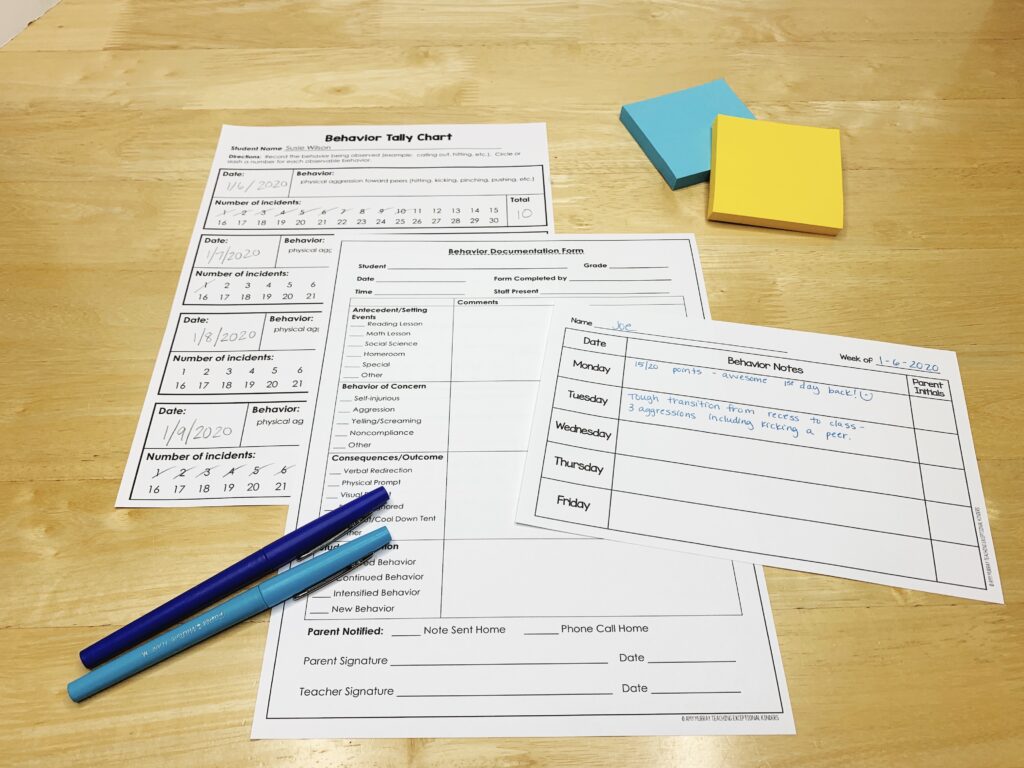
By sharing progress notes with parents, they will be more likely to work alongside you to improve the behavior. For example, they might notice that their child had a great day at school after they made a change to the bedtime routine at home. If they didn’t receive any communication from you about the behavior, they wouldn’t be able to connect those dots.
It’s also important to share progress data with any relevant school staff, like administration or specialists who might have this student on their radar for additional support. When you’re able to show them that the behavior interventions you’ve tried aren’t working, it will be much easier to get the ball rolling for the next steps.
5. Have a Plan for Next Steps
Which leads to the final step of progress monitoring: Have a plan for what comes next. Progress monitoring by a classroom teacher is not intended to drag on for the entire school year. The point of data collection is to either find a behavior intervention that works for the student or to refer the student for more substantial supports.
Each time you monitor progress for a behavior when implementing a specific intervention, set a timeline for when you will revisit that intervention. Based on the data you’ve collected, you can decide to continue that particular behavior strategy because it’s working or try something else. As you continue to try different behavior strategies with the student, your progress monitoring data will inform your next steps.
Printable Behavior Documentation Forms
I have put together a set of editable behavior documentation forms that will make data collection so much easier in your classroom! There are a variety of forms to choose from so that you can choose the format that works best for the specific behavior you’re tracking. Plus, you can edit the text on the forms to match the specifics of your progress monitoring.
If you’d like to take a closer look at these printable behavior documentation forms, you can find them in the Teaching Exceptional Kinders shop or in my TPT store.

Save These Tips for Behavior Progress Monitoring
Be sure to save this post so you can come back to it later! Just add the pin below to your favorite Pinterest board of behavior management tips. You’ll be able to quickly find these tips and resources when you need to monitor behavior progress in your classroom.
