
When students aren’t meeting our expectations for behavior, we know that telling them to stop doing X, Y, or Z isn’t the most effective way to address the misbehavior. Instead, we know that it’s more effective to reframe things with positive phrasing. However, over time we might find ourselves abbreviating the redirection to something like, “Make good choices.” In this post, I’m going to share why that phrase doesn’t actually work for teaching behavior expectations and what you should try instead.

How to Teach Behavior Expectations in the Classroom
When we use phrases like “make better choices” or “please make a good choice”, we can’t expect students to know what that actually means. Young students are learning how to navigate the classroom setting for the first time. It’s important that we teach them what’s expected of them in the classroom and what it looks like to meet those expectations.
1. Explicitly Teach Expected Behavior
The first step in teaching behavior expectations is to plan on explicitly teaching them to your students. Set aside time in your daily routine, especially at the beginning of the year, to address behavior expectations throughout the different activities and settings your students will experience during the day.
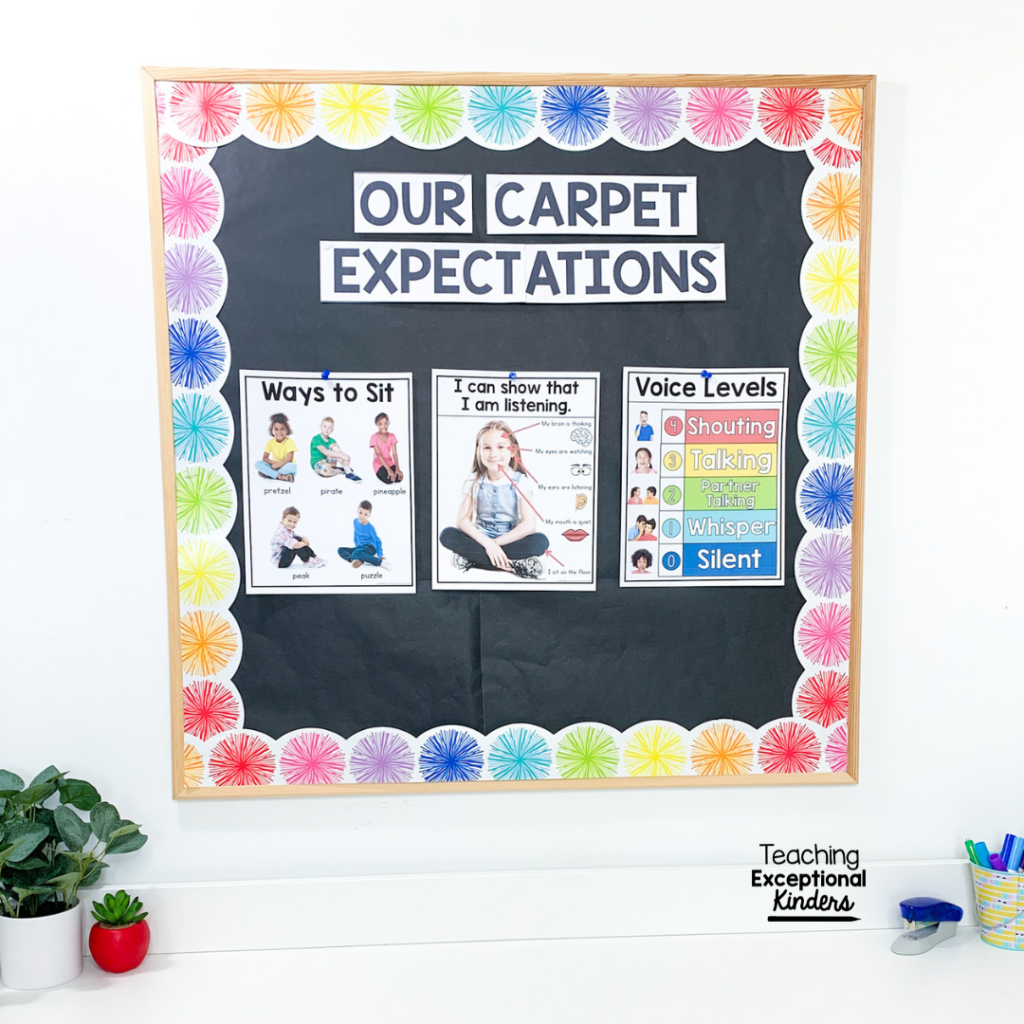
For example, during your first few visits to the carpet, you can explicitly teach things like how to sit at the carpet as well as the appropriate voice levels that are expected during this part of your daily routine. We can’t expect our students to be mind readers when it comes to behavior expectations! We need to actually teach students what we want them to do.
2. Be Specific
As you teach behavior expectations to your students, it’s important to be specific in what you’re looking for. We all know that what is “good” to you is different than what is considered “good” in music class or P.E. That’s why specifically outlining your expectations to students is so important.
A great example of this would be teaching students about voice level expectations in the classroom. Using subjective phrases like “inside voices” might not make sense to young students. After all, they’re using their voices and they’re indoors; wouldn’t that make it an inside voice? Instead, you can take time to discuss and practice the different voice levels that you expect them to use throughout the day. This will make your explicit instruction much more effective and easier for students to understand!
3. Set Goals
It’s not realistic for students to meet behavior expectations all of the time. That’s where goals come into play! You can use goals to help students understand what you expect them to do and work towards those expectations. Oftentimes, misbehavior is a lack of both instruction and practice with expected behaviors. By setting goals, you’re explicitly discussing and reinforcing these behavior expectations to your students.
4. Use Visuals
You can use visuals to support your efforts to communicate and reinforce behavior expectations to your students. That way, it’s easy to revisit these expectations throughout the school year. For example, if you give your students a choice for how to sit at the carpet, you could create a visual display where students can see those options.
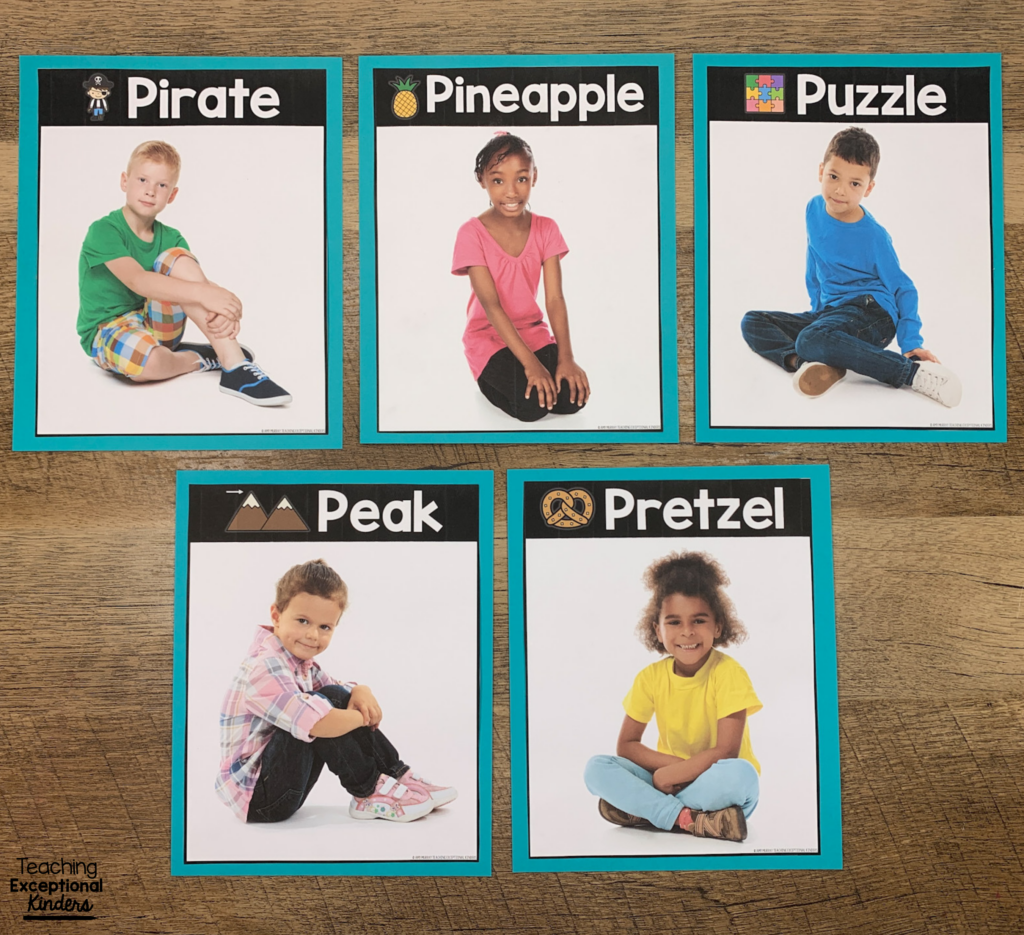
This visual makes it so much easier for them to meet the expectation of how to sit at the carpet because all they need to do is choose a picture and then recreate it. This is so much more effective than constantly asking students to “sit down” during circle time. Instead, you can stop feeling like a broken record by simply pointing to the display and asking students to choose how they want to sit that day.
5. Reward Students for Meeting Expectations
As with learning any new skill, it’s helpful to get feedback that you’re on the right track. The same is true for students who are learning the behavior expectations of the classroom! After setting a goal for a particular behavior, you can reward students for meeting that expectation.

One of my favorite ways to reward students while teaching behavior expectations is with a whole group reward chart. After communicating the target behavior and the reward they’re working towards, you can simply watch for students who are doing a great job with that target behavior. Recognize them in front of the class and then ask them to add a piece to the whole group reward chart. Once the chart has been completed, the class earns the reward!

Once your class has a good handle on the target behavior, you can move on to the next behavior expectation that you’d like to improve and reinforce. To keep things fresh, you can swap out the rewards or even the reward chart that you’re using. I have many different sets of Build-a-Reward charts that are easy to swap out for different seasons. This is an easy way to maintain student buy-in for the reward system so they can continue to learn the behavior expectations in the classroom.
Kindergarten Behavior Blueprint
I have put together a resource that will help you in your efforts to teach behavior expectations in the classroom. The Kindergarten Behavior Blueprint is a self-paced video course that walks you through the steps needed to build strong classroom management. In addition to the lessons, you’ll have access to a library of classroom management tools and resources.
This library includes over $500 worth of printable resources, including visual supports, reward systems, and more! With the Kindergarten Behavior Blueprint lessons and corresponding visuals, you’ll be able to set up a classroom management system that runs smoothly all year long!
Just click the button below to take a closer look at everything included in the Kindergarten Behavior Blueprint.
Save These Tips for Teaching Behavior Expectations
Be sure to save this post so you can come back to it later! Just add the pin below to your favorite classroom board on Pinterest. You’ll be able to quickly find these tips and resources when you want to tell your students to make better choices (but know there’s a better way).
